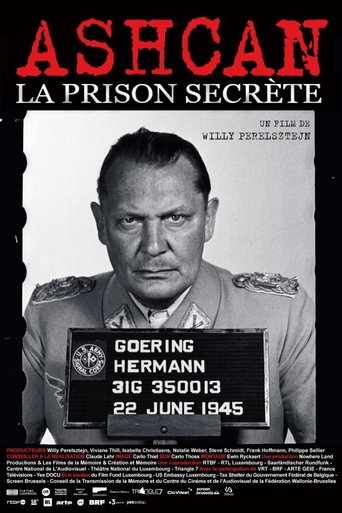
ASHCAN is a theatrical docu-fiction. It tells the story of the secret prison where the main Nazi leaders were incarcerated following the Allied victory on May 8, 1945 under U.S. authority at Mondorf-les-Bains, Luxembourg.
Oswald the Rabbit is a WWI private charged with delivering a letter to the western front.
1988 CBC docudrama on Canada's role in WW1. Terence McKenna tours the Battlefields of Ypres, the Somme, Vimy Ridge and Paschendaele. Actors portray several Canadian soldiers in WW1 in re-enactments based on their memoirs, diaries and letters.
During the Second World War 6 prisoners are being held in a prison cell in Concentration Camp Amersfoort, Holland. Their fate is unknown. This night has an impact for many years and in many lives.
Producer Samuel Cummins, along with five participants in World War I, discuss the key events of the war as illustrated by an assemblage of battlefield and other documentary footage. This film is not the same as, but seems likely to have either inspired or been inspired by, Norman Lee's British production of the same title (q.v.), apparently released the following year.
The Theatre Royal Masterclass Trust and the Royal British Legion presents The Two Worlds of Charlie F, a soldier’s view of service, injury and recovery. Moving from the war in Afghanistan, through the dream world of morphine-induced hallucinations, to the physio rooms of Headley Court, the play explores the consequences of injury, both physical and psychological, and its effects on others as the soldiers fight to win the new battle for survival at home. Taken from the personal experiences of wounded, injured and sick service personnel The Two Worlds of Charlie F is a darkly comic, authentic and uplifting tale of survival, made even more powerful by the soldiers performing it themselves. Although the play is inspired by actual experiences, the names of the characters have been changed. A play by Owen Sheers Directed by Stephen Rayne Composed by Jason Carr Designed by Anthony Lamble Lighting Design William Reynolds Filmed by Uppercut Films Ltd
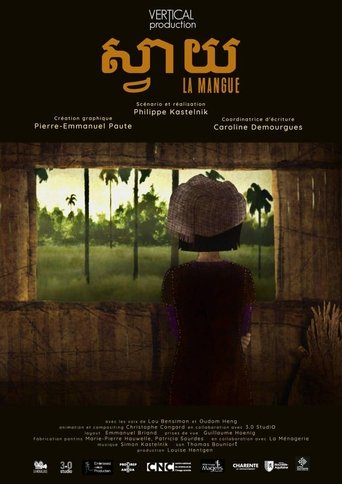
A village in Cambodia. Bopha raises her son Sokhem alone. One night, guided by a strange voice, he sets off in pursuit of a magic mango. Bopha follows him and reaches the border between the world of the living and the dead. Memories of war and oppression resurface. Bopha then reveals his heavy secret.
A year on from Russia's invasion, a look at how the war has played out from the air and how Ukraine use drones, satellites and smart tech to thwart the enemy. Featuring drone photography of key locations from before and after the war.
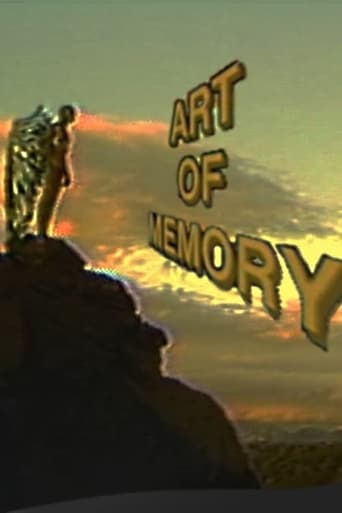
Manipulating a variety of sources, Vasulka uses creative imaging tools to situate historical images against Southwestern landscapes of incredible beauty. Contorting the images into a variety of isomorphic forms, Vasulka creates a literal shape for these memories, developing these shapes as metaphors for the processes of fragmentation, condensation, and inversion, that inevitably contort fact into memory. While much of the raw material for the tape is drawn from World War II and its rehearsals, the Spanish Civil War and the Russian Revolution, The Art of Memory is really an extended meditation seeking to reconcile the blurry, banal photographs of historic figures with the mass destruction they helped engineer.
Film about the allied victory in Burma
Northern France, 1917. Australian Private Joseph Richmond and his fellow soldiers from the 18th Battalion A.I.F. have retreated into a supply trench during an artillery barrage. After being left by himself to act as a listening post, Joe discovers the all-important trench periscope has been damaged, meaning he has to poke his head above the parapet to determine enemy movements after he can overhear them close by. After exchanging shots with an unseen enemy, he retreats, but is confronted by a mysterious soldier. The soldier tells Joe go with him, even though he is not Joe’s relief. Joe refuses to leave his post without proper orders. The soldier reveals himself to be Joe as well, that Joe’s shooting exchange was fatal, and he has been dead ever since. The mysterious soldier represents everything Joe had to leave behind to become a soldier, but now he is dead, the two must reunite so Joe’s soul can meet its destiny.
Two-part documentary on Japan at war, examining the Japanese treatment of Allied prisoners of war. Turning Against the West Using Japanese archive footage and interviews with both prisoners and their guards, this film investigates why, having treated their POW's comparatively well during World War I, their attitudes had altered so dramatically by World War II Death Before Surrender Conclusion of a two-part documentary on Japan at war, examining why, when the Second World War turned against Japan, so many Japanese soldiers chose death rather than surrender. Archive footage and interviews with veterans form a comprehensive portrait of a nation in crisis, revealing how Japan's inability to surrender would have terrible consequences for all the countries touched by the war in the East
An officer in his secret mission to India is injured by foreign agents. He returns to Greece but must be considered dead by his wife for the needs of the service, since he must discover who betrays the state secrets.
Including extraordinary and unseen historical footage of WW1 and 2 and narrated by Sir Martin Lewis, 100 Years of the RAF is a definitive film that pays tribute to the determination and courage our men and women take on in the theatres of war; to defend our freedom and bring relief to people in need.
The film documents a debate about early 20th century films, mainly 1910 to 1920, from short news reels to excerpts from full-length movies. At Amsterdam's Film Museum, film directors, students, and film researchers and archivists look at the moving images and discuss their meaning, in the social and technical contexts. Moody live music was added to the edited film.
Documentary about specific phases of the battle for the Donetsk airport and about the hero-fighters of the Ukrainian Volunteer corps in Pisky. The film presents the war in extreme focus – adrenaline, humor, pain, anguish, and courage are tightly packed into 82 minutes of screen time. It shows scenes of the battle, evacuation of the wounded, the capture of the new airport terminal, and civilians, who live near the fighting’s epicenter. It features death and frontline humor, and a bit of philosophical discussions as well.
The film goes behind the scenes of one Iraqi family's struggle to survive amidst the carnage of the growing Shia insurgency. Nineteen-year-old Ibrahim dreams of revenge when his brother is shot and killed by an American patrol. With scenes of fighting and death on the streets of Baghdad, this is the closest most viewers will ever come to being in Iraq; kneeling in prayer amidst a thousand Muslim worshippers, feeling the roar of low-flying Apaches, riding atop a sixty-ton tank, driving with masked resistance fighters to attack American positions, fleeing the threat of an overwhelming response, the blood in the street, a tank on fire, or the cold, distant stare of a dead Iraqi fighter.
At the Paulistano Club pool, Lygia tells Nilo that she liked the album "Lua Branca," recorded by the young man. He promises to visit her to perform the song in person. The visit marks the beginning of a romance between the two, which later becomes an engagement. However, Nilo is involved in the 1924 uprising in the barracks and, with the outbreak of the revolution, leaves for the front. The city of São Paulo shows the damage caused by the bombings. The rebels, wanting to avoid further sacrifices to the city, after days of fighting and victory, decide to abandon it.
Activate your FREE Account!
You must create an account to continue watching