1961 - the year when Swedish UN soldiers are in the crisis-ridden Congo and Secretary General Dag Hammarskjöld dies in a plane crash. Swedish film's biggest hit, "Are there angels?", has its premiere with Christina Schollin in one of the roles. Yuri Gagarin becomes the first man in space and the Volvo P 1800 appears on the roads. Ewy Rosqvist is a rally ace and in April the regal ship Vasa is lifted up after 333 years at the bottom of Stockholm's stream. In August, the Berlin Wall is built and outside the Stockholm archipelago, Radio Nord broadcasts music and news.
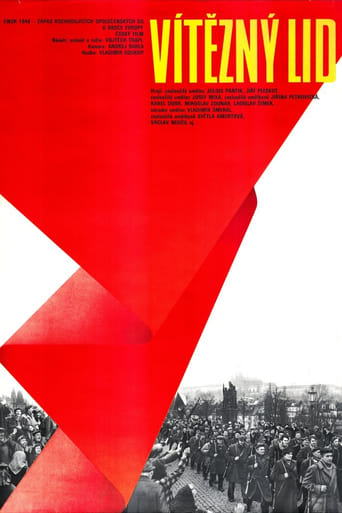
February 1948. The struggle of decisive social forces for the heart of Europe.
Between 1900 and 1920 more than 14 million immigrants arrived in the US, like Howard Zinn's parents. They came fleeing poverty or war, or racism, or religious persecution. They dreamed of a promised land, of wealth, or simply of a better life.
The life of Wolfgang Amadeus Mozart
Set at the backdrop of the colonization of pre-Hispanic Philippine, this historical epic revovles around the story of Ramir, a half-caste warrior falls in love with Princess Mahalina. Ramir has to reckon with another brave native, Kiram.
Based on Worldwide Defeat by Salvador Borrego, it exposes the forbidden side of history and reveals Adolf Hitler's hamartia.
In January 1945 during WWII, German corporal Kaspar and a Russian fugitive become partners in survival.
A son seeking to fulfill his late father’s dream takes his band from the storied city of New Orleans to the shores of Cuba, where — through the universal language of music — dark and ancient connections between their peoples reveal the roots of jazz.
A cafe is growing, tucked in to the mountainside air raid shelter of the DMZ borderlands. A light light flickers, illuminating the past, present, and future. I'll see you at the DMZ! Shim was a free, one-day pop-up cafe staged in Yangji-ri village’s air raid shelter at the Korean DMZ. Referencing Korean cafe culture’s fixation on third place, the DMZ’s evolution from security tourism, to ecological peace tourism, and its repurposing as art production site, Shim attempts to intervene and align the past and present. Yangji-ri was one of many minbuk propaganda villages established by the Park Chung Hee regime in the 1960s to showcase the farming bounty and prosperity of the south for a North Korean gaze. The village was formerly part of the Civilian Control Line (CCL) until 2013 when it was reterritorialized as a normal part of South Korea.
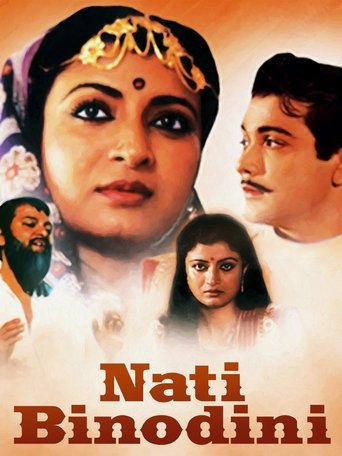
Girish Ghosh, a dramatist, comes across Binodini Dasi, a prostitute who has a knack for theatre. Soon, she manages to garner a lot of attention because of her performances. Her struggles, her eminent role in the formation of Star Theatre in North Kolkata and her sacrifices for the same are shown. She was a pioneering entrepreneur of Indian Bengali stage. Her meeting with Sri Ramkrishna Dev, his liking for her acting and his blessings change her life significantly. She gives up acting which was her life after the sudden demise of the lord.
Biography portraying the life of the Roman Emperor Nero.
A family reflects on what they are grateful for, even though they cannot afford a turkey for their Thanksgiving dinner.
Lapu-Lapu who defeated Spanish invaders on then land of Mactan.
Aleksis Kivi (1834-1872) was a Finnish author who wrote the first significant novel in the Finnish language, "Seven Brothers/Seitsemän veljestä". Although Kivi was among the very earliest authors of prose and lyrics in Finnish language, he is still considered one of the greatest of them all.
After the brutal massacre of a peaceful demonstration of the working people on their way to the Tsar, Lenin and other Party members in exile call for an armed uprising of the workers. At Presnya build barricades. The people are arming themselves. But the heroic armed uprising of the workers of Presnya is brutally suppressed by the tsarist troops. However, the struggle of the workers under the leadership of Lenin continued.
Princess of Rome, Mellika, granddaughter of Great Caesar. The story talks about her move from Byzantium in the 9th century, to avoid her marriage with Krytos, and brings her to Baghdad to become the mother of Imam Mahdi, the Savior.
In the spring of 2005, a mother living in Hanoi receives a diary of her late daughter, a young doctor working at a field hospital during the war. Kept for over thirty years by an American veteran, the diary is an account of her life spanning two years, from April 1968 until her death in June 1970.
The film tells the story of a gang leader who helps in the national struggle. Paşa receives gold from foreign powers in order to neutralize the National Forces. Meanwhile, Captain Murat, gang leader Kuduz Recep, and his men raid Paşa's house. They seize all the gold and set off for Ankara. Kuduz Recep says he cannot continue on the journey because he was wounded in the raid. He takes the gold and flees with his men. Captain Murat pursues Kuduz Recep and his men. Hamza, one of Recep's men, takes advantage of Recep's injury, ties him up, and throws him into the river. He hides the gold and takes over as the leader of the gang. Captain Murat finds Recep in the river and they begin searching for Hamza together. Captain Murat is killed during a clash with Hamza's men. Meanwhile, Recep finds Hamza and takes the gold. He will then set off to transport the gold to Ankara.
Three high school graduates prepare to start the next chapter of their lives, but the outbreak of World War II may derail their dreams forever.
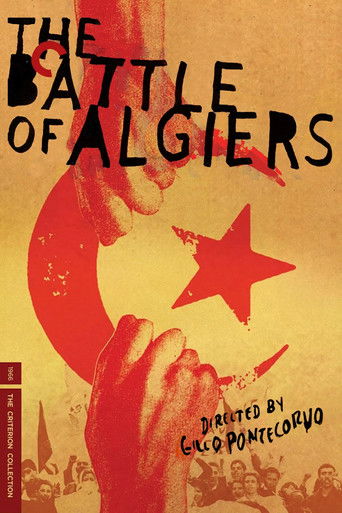
Made just three years after the end of the French-Algerian War (1954-1962), Gillo Pontecorvo's The Battle Of Algiers instantly ignited discussions of this complex historical period. Using the film as a point of reference, this 2004 documentary attempts to reconstruct the Algerian experience of the battle for independence.
Activate your FREE Account!
You must create an account to continue watching