The fatal encounter between Henry II and the Archbishop of Canterbury Thomas Becket.
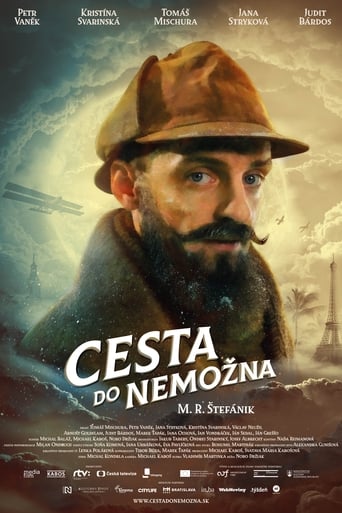
Milan Rastislav Štefánik was the first Slovak to circumnavigate the world, to climb Mont Blanc, to survive the shooting down of his ice-plane during World War I. He was an intellectual, scientist, inventor, astronomer, national hero, but also a lover of women and a bon vivant. 100 years ago, everyone considered his dreams a utopia, but he was not afraid to step into the unknown and realise his dream of liberating his own nation. His life story seems almost unbelievable, considering that he did it all as a single man in failing health, from the poorest of circumstances.
The documentary tells the story of the Berlin luxury hotel, which was built by the director's great-grandfather and fell victim to a fire shortly after the end of the Second World War.
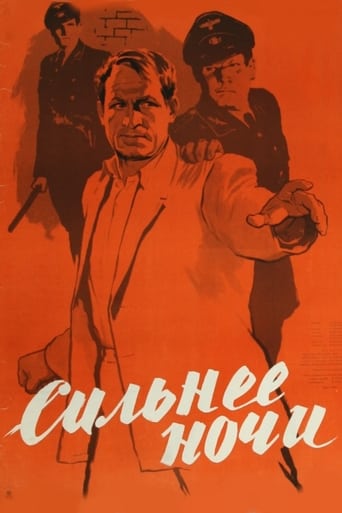
The story of a resistance fighter in the Nazi era: Communist Hans Löning was arrested in 1933, imprisoned in a concentration camp and tortured. The Gestapo plans to smash the resistance group around Löning. Despite the imminent threat to his life, Löning, together with his wife, organized the passive resistance of the Hamburg workers against the Hitler regime. In 1944, Löning was again taken and killed.
In a castle, somewhere in the Thirld World, Diaz is delirious, dreaming of the power he had in Eldorado, while oppressing the indians, workers and peasants. He is well aware of the menace his old victims represent, while a miracle-making shepherd fascinates and frightens him. Diaz finds a countrywoman, symbol of purity, and prepares a ceremony in his castle resembling his own funeral.
Hungary, end of World War II. Five Hungarian soldiers desert their troop which has been directed to Germany. They are escaping with the help of a stamp and unfilled travelling warrants, trying to survive until the war ends.
Hemen Gupta's 'Bhuli Nai' (1948) was set against the infamous 1905 Partition of Bengal by Lord Curzon.
A southerner who fought with the Union army regains the confidence of his community after the war.
This historical costume drama is a mini-series on the life of Flemish first-rate Baroque painter Pieter Pauwel Rubens (1577-1640), whose artistic success throughout Europe not only made him a fortune allowing him to stock his Antwerp residence ('Rubenshuis' in Dutch) and a castle at Elewijt, in the countryside nearer Brussels, with numerous fashionable treasures, but also became an ennobled diplomat for the Spanish Hapsburg rulers of the Southern Low Countries (now Belgium), who often traveled, for painting commissions and/or diplomatic missions, to and worked in Italy, France, Spain, all Catholic powers, as well as protestant England and the United Provinces (mainly Holland), also allowing him to meet other prominent contemporaries such as artists. It further covers his marriages to Isabella Brandt and Hélène Fourment.
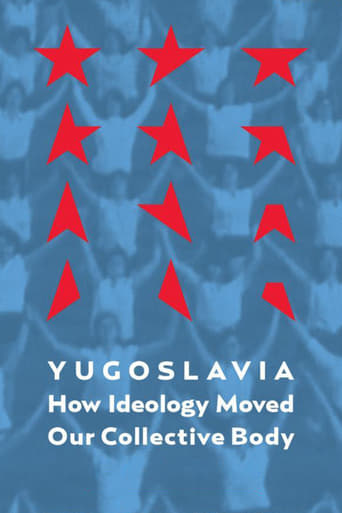
A research-based essay film, but also a very personal perspective on the history of socialist Yugoslavia, its dramatic end, and its recent transformation into a few democratic nation states.
1951 - the year when Snoddas plays bandy and the naval spy is exposed. Stålfarfar rides a bike, Pär Lagerkvist receives a Nobel Prize and Tage Erlander and Karl Gerhard are getting older. Out in the world there's a cold war and in Sweden there's the big Västgöta maneuver. There's a plastic fashion and new hairstyles for a new age.
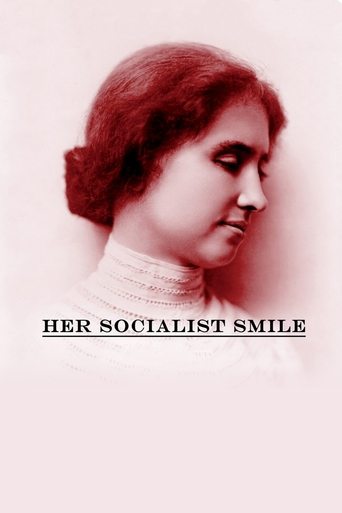
The memory of a particular moment in early 20th century history when, in 1913, Helen Keller (1880-1968), a deaf-blind writer, lecturer and political activist, spoke, for the first time and in public, about socialism and progressive causes.
In this special edition of Globe Trekker Chinatown, Lavinia Tan, Justine Shapiro and Megan McCormick travel worldwide to explore the magic and mystery of Chinatowns across the globe. Lavinia Tan begins the journey in Malaysia and Singapore where overseas traders led the earliest migrations of Chinese people. The journey continues from there to the United States, where Justine Shapiro visits San Francisco. Megan McCormick explores New York s Lower East Side, home to the largest Chinatown in the Western Hemisphere. After a short trip to London s Soho district, Lavinia Tan ends this journey with a visit to Hong Kong exploring the world famous film industry and the 21st century migration of Chinese back to their homeland.
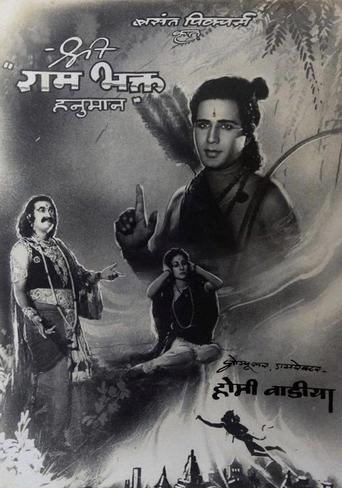
Ravana (Niranjan Sharma) orders Maricha to turn into a deer to entice Sita (Sona Chatterjee) with the notion of kidnapping her. Rama (Trilok Kapoor), Lakshman (Prabhash Joshi) and Sita are in the Panchavati forest for their fourteen year exile. Espying the golden deer sent by Ravana to lure Rama away, Sita asks Rama to get it. On hearing a cry of pain she sends Lakshman after his brother thinking he’s hurt. Ravan comes in the guise of a hermit begging alms and makes Sita step over the Lakshman Rekha (line), Lakshman had drawn around their cottage for her safety, asking her not to step beyond it. In their search for Sita, Ram and Lakshman meet Hanuman (S. N. Tripathi) whom they help in the fight between Sugriva and Bali. Hanuman then helps in finding Sita. (Wikipedia)
Ten years after fleeing the regime in Serbia, Marko finds himself defending some of the very people that he fought against while he lived there, including the notorious Radovan Karadzic.
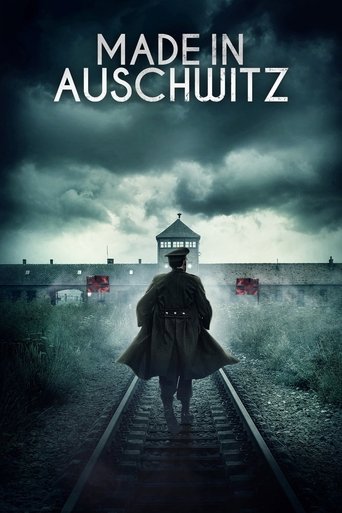
Around 80 years ago, the gynecologist Carl Clauberg conducted medical experimentation on Jewish girls and women in Auschwitz. The results of those sadistic experiments were used in medicine across the globe. It is possible that German companies played a part in those experiments. Most of the survivors became infertile, and very few of them were later capable to give birth. The Untold Story of Block 10 introduces the audience to those who have survived.
Charles Baudelaire was one of the giants of 19th-century French poetry, and he earned his position among that nation's luminaries through the poems in one slim volume, entitled Les Fleurs du Mal (Flowers of Evil). A perfectionist to the extreme, he struggled with every word of those few poems for many years before he consented to see them published. When he did, six of them were condemned by the state censors as obscene. It was surely a powerful blow to him to have such a significant part of his life's work so rudely suppressed. This courtroom drama follows him at the 1857 trial at which he defended his works. The filmmaker has chosen to symbolically re-enact certain poems about the love of a woman as they are being read for the court. It is easy to imagine that, as was certainly the case for the trial of Oscar Wilde in England, this courtroom trial was a form of punishment for his publicly dissolute lifestyle.
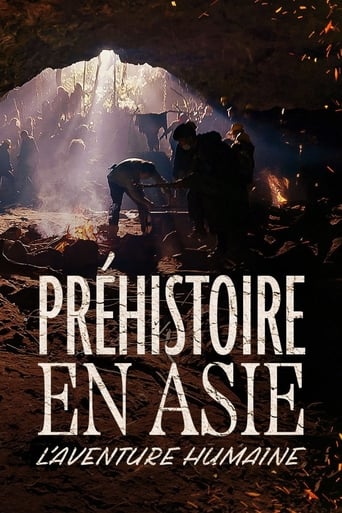
In the docudrama "Les Derniers Secrets de l'humanité" (The Last Secrets of Humanity), author and director Jacques Malaterre and paleoanthropologist and professor at the Collège de France Yves Coppens reveal the incredible adventure of Asian prehistory. How does science help to reconstruct these bygone times in images? Thanks to discoveries made at excavation sites and in analysis and genetics laboratories, researchers are now revealing this distant, vanished past.
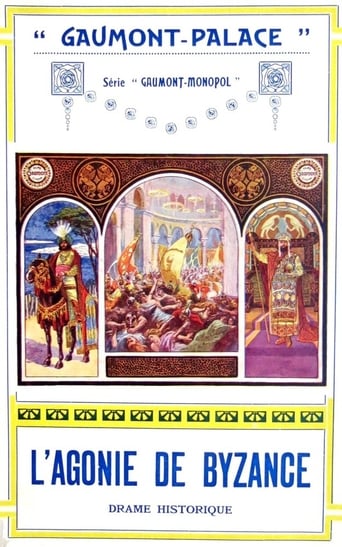
The fall of Constantinople to the Ottoman Turks, an event that marked the end of the Byzantine Empire.
Architect I.M. Pei speaks about his famous works, such as the addition to the Louvre in Paris, the East Wing of the National Gallery of Art in Washington, D.C., and the Meyerson Symphony Center in Dallas, Texas. Footage of these projects shows both interiors and exteriors. Various other experts comment on the impact and importance of Pei's work.
Activate your FREE Account!
You must create an account to continue watching