At dawn on June 22, 1941, Germany invaded the Soviet Union. On the same morning, Germany demanded permission from the Swedish government to transport 18,000 German soldiers from Norway to Finland across Sweden by railway. This was a difficult problem for the Swedish government. On one hand remaining friendly with Germany at the height of its power, on the other maintaining a strict neutrality. The Swedish cabinet meet in Stockholm to decide upon the best reply to the German demands.
Alex Honnold and Hazel Findlay head to Southern Africa for an experience of a lifetime. Africa Fusion takes us from the breathtaking orange granite and vast landscapes of Namibia, through the desert and across to lush red sandstone of Waterval Boven in South Africa. Carrying on the journey in South Africa we follow Alex and Hazel North to the wild and remote Blouberg (Blue Mountain) range. From the North we then journey far South to Cape Town, where Alex and Hazel explore a city crowned in mountains, from rock face to rock face. Their odyssey reveals surprising treasures and world-class climbing – while experiencing the joy of the journey along the way. Join them as they uncover these hidden gems in unforgettable settings.
Khalo Matabane spent two years making the film, interviewing those who knew and loved Mandela, and also those who criticised him. Global thinkers, politicians and artists including the Dalai Lama, Henry Kissinger and Ariel Dorfman talk about the effect of his policies and his decision making. Their thoughts are weighed equally with ordinary South Africans like Charity Kondile, who refuses to forgive her son's apartheid operative murderer. Through these interviews, completed in the last months of Mandela's life, Matabane interrogates for himself the meaning of freedom, reconciliation and forgiveness. By doing so he challenges Mandela's enduring impact in today's world of conflict and inequality. Thought-provoking and reflective, Mandela, the Myth and Me is a moving film which frames Mandela from a fresh, deeply personal perspective. (Storyville)
Nazi troops massacre 30,000 Jews over a three-day period in September 1941. Babyn Yar ravine in Kyiv, Ukraine.
Following the journey of an Evangelical minister trying to find the courage to preach about the growing toll of gun violence in America. Reverend Rob Schenck, anti-abortion activist and fixture on the political far right, breaks with orthodoxy by questioning whether being pro-gun is consistent with being pro-life.
A behind-the-scenes look at Rick Disharoon and his small-town, family-owned business, The Metal Shop, as the team gets the chance of a lifetime: to build an epic monster truck for Danny McBride and one of Hollywood’s biggest television shows, “The Righteous Gemstones.”
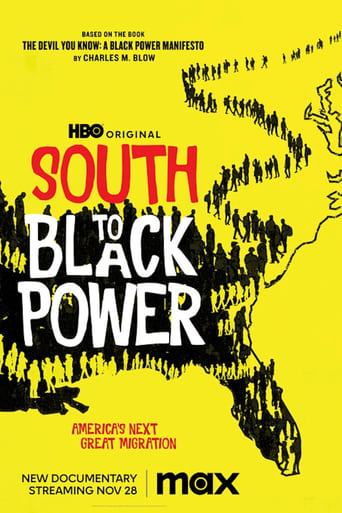
In his provocative 2021 book, The Devil You Know: A Black Power Manifesto, New York Times opinion columnist Charles M. Blow calls for a “reverse Great Migration” of African Americans from the North back to the South to upend today’s political power structures while reclaiming the land and culture they left behind. South to Black Power does more than illustrate Blow’s enlightening ideas; we journey through Blow’s personal story, from his childhood in Louisiana to his role as father to young adult children in New York City, showing us the hard-won truths behind his vision for the future.
Sándor Sára's meditation on loneliness and the human condition.
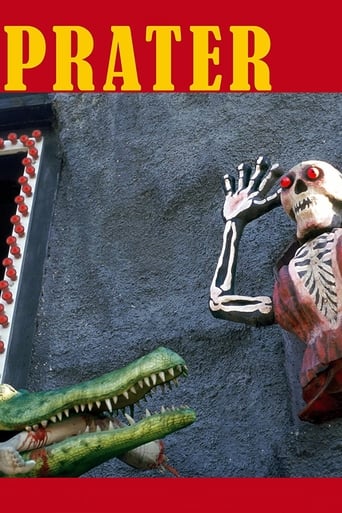
Vienna’s Prater is an amusement park and a desire machine. No mechanical invention, no novel idea or sensational innovation could escape incorporation into the Prater. The diverse story-telling in Ulrike Ottinger’s film “Prater” transforms this place of sensations into a modern cinema of attractions. The Prater’s history from the beginning to the present is told by its protagonists and those who have documented it, including contemporary cinematic images of the Prater, interviews with carnies, commentary by Austrians and visitors from abroad, film quotes, and photographic and written documentary materials. The meaning of the Prater, its status as a place of technological innovation, and its role as a cultural medium are reflected in texts by Elfriede Jelinek, Josef von Sternberg, Erich Kästner and Elias Canetti, as well as in music devoted to this amusement venue throughout the course of its history.
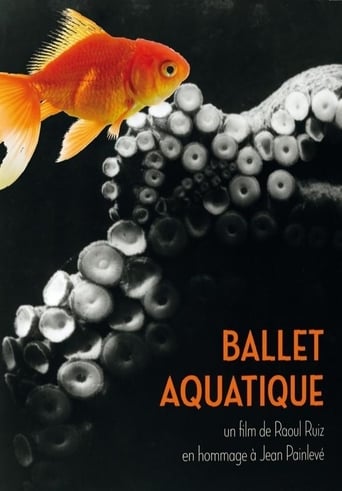
In one of his very last projects, Raul Ruiz celebrates the films of his historical predecessor Jean Painlevé, a documentary innovator whose work always blended science with surrealism. Ruiz and friends further perfect the art of mystification. Why it is so difficult to count fish in an aquarium? Ruiz, his loyal actor Melvil Poupaud and his producer François Margolin come up with a wide range of hypotheses. With their bone-dry wit, they keep up the tradition of the French pataphysics: the science of imaginary solutions. (IFFR)
On 11th January 2008, hired by the City of Cleveland, lawyer Josh Cohen and his team filed a lawsuit against 21 banks, which they held accountable for the wave of foreclosures that had left their city in ruins. Since then, the bankers on Wall Street have been fighting by with all available means to avoid going to court. This film is the story of that trial. A film about a trial that may never be held but in which the facts, the participants and their testimonies are all real: the judge, lawyers, witnesses, even the members of the jury - asked to give their verdict - play their own roles. Step by step, one witness after another, the film takes apart, from a plain, human perspective, the mechanisms of subprime mortgage loans, a system that sent the world economy reeling. A trial for the sake of example, a universal fable about capitalism
The Hills of Wrath takes us to the heart of the land of Condrieu and Côte-Rôtie wines, the singular domains of winemaker Christine Vernay. Beyond the climatic hazards that these women and men will endure that year, the film is an odyssey that pays tribute to an extraordinary place and personalities, a breath of hope that they transmit to us in the face of a changing world. Through their experience, it is also an important testimony to various current issues: the consequences of climate change, the place of women in agriculture, the rupture in biodiversity and soil protection via organic viticulture and of course transmission.
Celebrated skateboarder Leo Baker shares the details of their rise to fame and the clash between their career and self-discovery as a trans person.
"This wonderful age in life where every thought strives toward an ideal, toward work, toward the future." Sahia Studios propaganda flick about how adults and their "those darn kids" attitudes affect adolescents.
In 1957, Britain exploded its first megaton hydrogen bomb - codenamed Operation Grapple X. It was the culmination of an extraordinary scientific project, which against almost insuperable odds turned Britain into a nuclear superpower. Featuring access to the top-secret nuclear research facility at Aldermaston, the programme features interviews with veterans and scientists who took part in the atomic bomb programme, some speaking for the first time, and newly released footage of the British atomic bomb tests.
An author spends a year and a half filming what happens as a new apartment building is built in a neighborhood of Barcelona.
In Canada and Alaska, the consequences of global warming are being keenly felt by brown bears - but in different ways by different populations. Their survival depends mainly on the quantity of wild salmon available in the region, as it is the fruit of their catch that enables the bears to accumulate fat reserves for the winter. While salmon populations off Canada's Pacific coast continue to decline year after year, in the immense Bristol Bay in western Alaska, as well as on Kodiak Island, they are increasing considerably. The water temperature in the North Pacific is now ideal for salmon development. From Canada to Alaska, the documentary follows different bear populations over a two-year period.
Dr George McGavin and Dr Zoe Laughlin set up base camp at one of the UK's biggest sewage works to investigate the revolutionary science finding vital renewable resources and undiscovered life in human waste. Teaming up with world-class scientists, they search for biological entities in sewage with potentially lifesaving medical properties, find out how pee can generate electricity, how gas from poo can fuel a car and how nutrients in waste can help solve the soil crisis. They follow each stage of the sewage treatment process, revealing what the stuff we flush can tell us about how we live today, and the mindboggling biotechnology being harnessed to clean it, making the wastewater safe enough to return to the environment.
Life aboard merchant ships with the Maritime Regiment of the Royal Artillery.
Jhalana’s refuge, India's urban leopard habitat, is controlled by the strong and experienced Bahadur. But his dominance is being challenged – by his son, Rana! Once a quiet youngster, Rana has grown into an ambitious young male. But in the animal kingdom, power is not inherited – it is fought for with strength and persistence. Rana is not content with just securing his place; he wants more. To fulfill his ambitions, he forms a bond with one of his father's females, and what begins as a simple interaction soon turns into a powerful partnership. The aging Bahadur has held his territory for six years and will not tolerate his son's claim. Rana faces a decision: retreat or fight. But Rana follows his instincts.
Activate your FREE Account!
You must create an account to continue watching